In July 1942, the fight for the Pacific was at a stalemate. The Japanese had been slowed down tremendously during the loss of the Battle of Midway. However, they still held on to a tactical advantage over the U.S. American commander Nimitz knew he could not push for another advance for at least another whole year. But Yamamoto couldn't advance either to Australia or Hawaii because he lacked the forward bases denied to him in the Coral Sea and Midway operations.
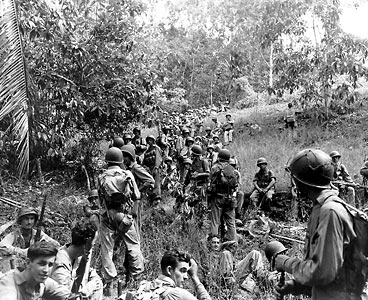
Photo courtesy of: http://home.nps.gov/pwr/customcf/apps/ww2ip/assets/images/event/detail/main_1943guadalcanal1.jpg
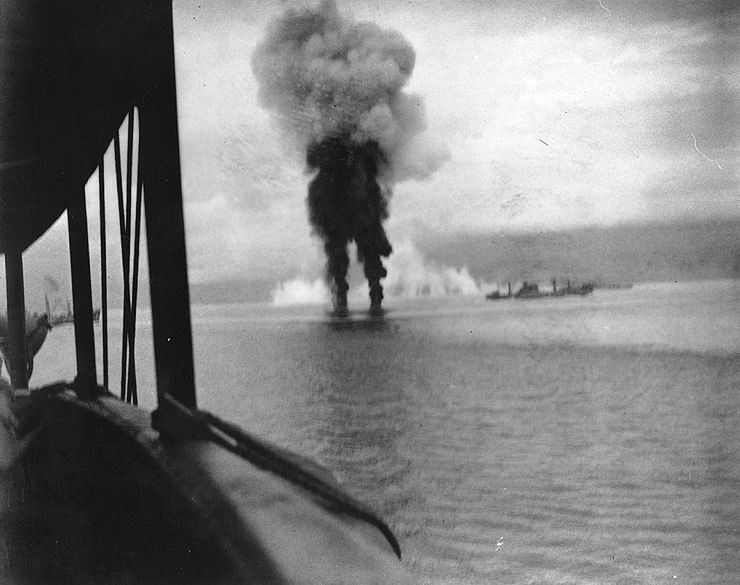
Photo courtesy of: http://www.biocrawler.com/w/images/c/cb/Naval_Battle_of_Guadalcanal.jpg
Guadalcanal was a 90-mile long island in the South. It was close to Tulagi, which was a much smaller island but had a seaplane base. With only one carrier the USS Long Island providing air cover the largest Marine operation in history up to that time was launched on August 7, 1942 to Guadalcanal. MacArthur moved his troops up the backbone of New Guinea which he thought was the primary military advantage. He had men, equipment, and material to get the job done. At nightfall, 12,000 men made it on shore with little supplies before a Japanese naval fighter spotted them and reported. A japanese admiral steamed around the southern shore and sank 4 American cruisers. Soon, more soldiers would die at sea than on Guadalcanal. Over the next 4 months 23 ships from each side were lost, but the Japanese could not replace these losses while the U.S. could which would decide the outcome of the war.
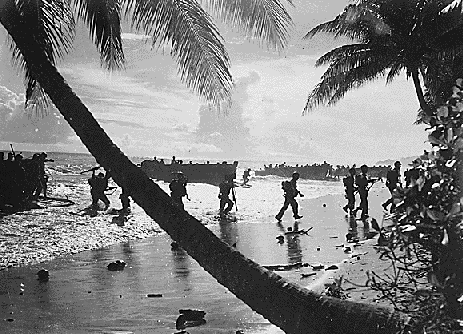
Photo courtesy of: http://www.bakeroneseven.com/guadal1.gif
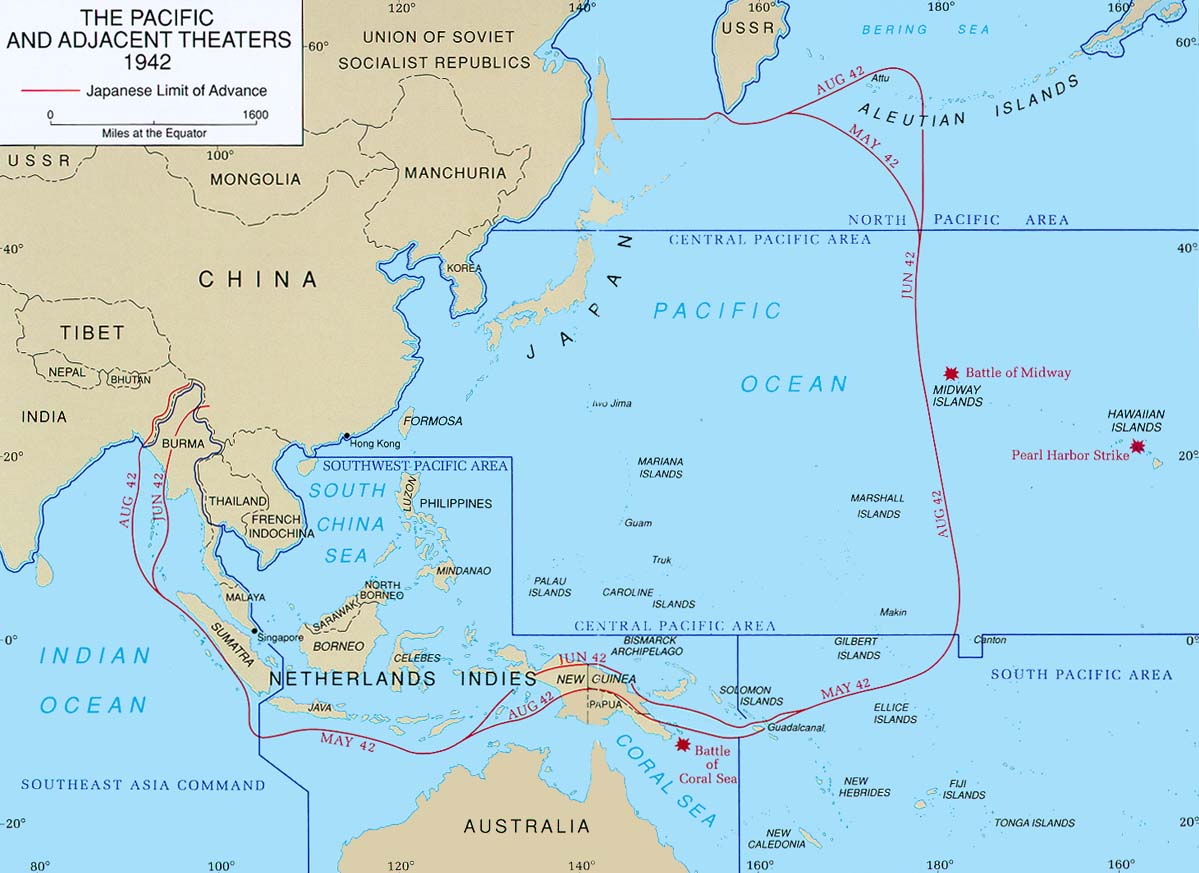
Photo courtesy of: http://www.history.army.mil/brochures/72-8/map1.jpg
Neither side had a long-term strategy during the battle so it became a true test of initiative. In a series of battles along the airfield perimeter, the Japanese greatly underestimated the number of Allied forces on the island. In September the Cactus Air Force, launched Army and Navy planes to join the Marines in fighting. The effect of the airpower on the Jananese was immediate. By November, the Americans sank two Japanese battleships and severely damaged some destroyers. By December Guadalcanal was taken by the Allied forces. 1,500 Americans and 25,000 Japanese died just on the island and even more at sea. With Guadalcanal though the Americans had a base to help take control over the entire Solomons.
http://www.worldwar2database.com/html/guadalcanal.htm
